
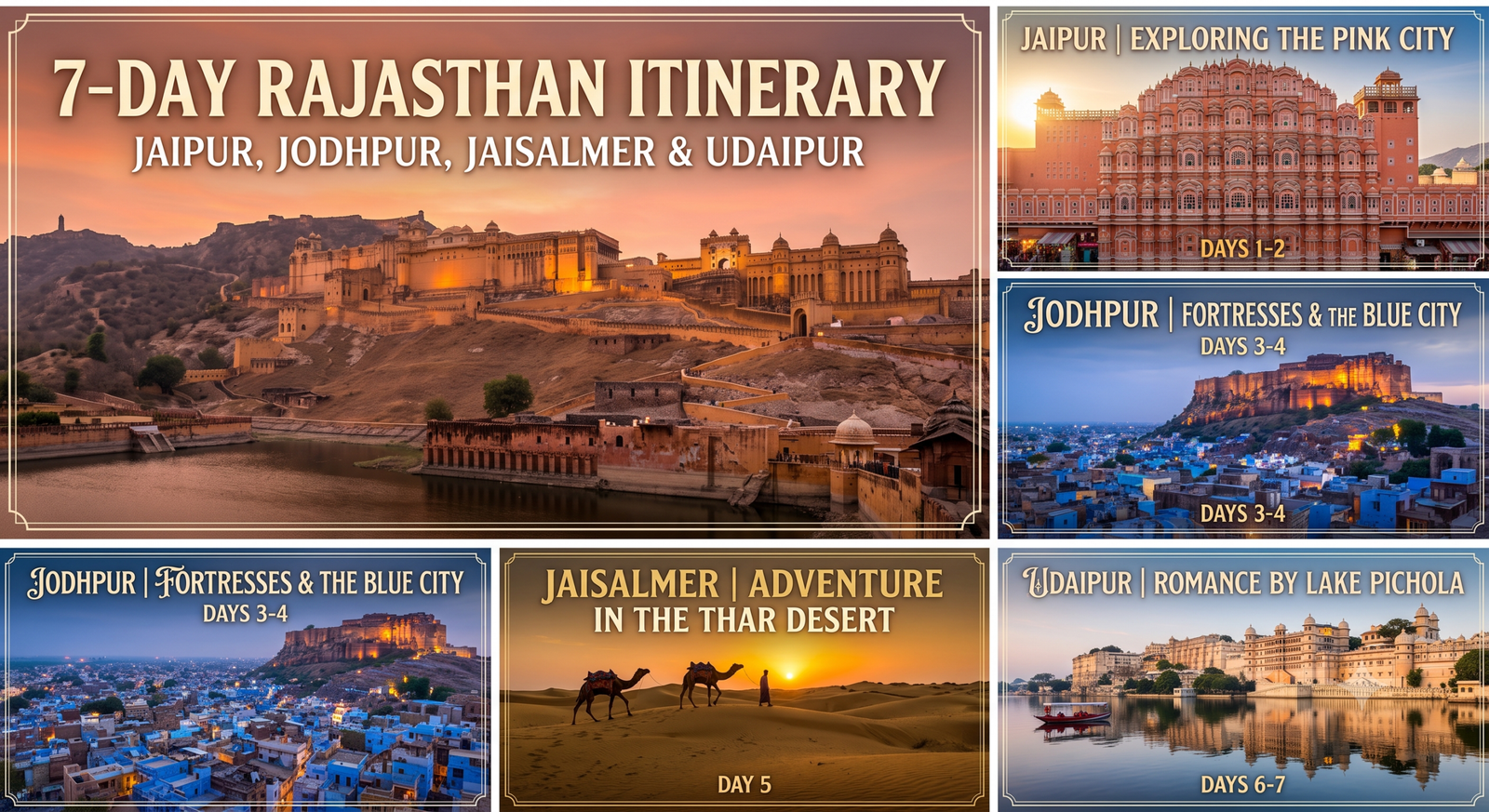

Seven days is enough to see Rajasthan’s four headline cities, as long as you travel them in the right order. The route that works best is Jaipur → Udaipur → Jodhpur → Jaisalmer. It avoids the long, dead-end drive between Jaisalmer and Udaipur, and it saves the desert for last, which is where most people want the trip to peak.
This 7-day Rajasthan itinerary gives you two days in Jaipur, a day and a half in Udaipur, a full day in Jodhpur, and a desert night in Jaisalmer. You will see the big forts and palaces, but you will also get time to wander old-city lanes, eat well, and watch at least one sunset that isn’t through a car window.
It suits first-time visitors, couples, and families with older kids. If you prefer a slow pace, read the notes near the end on what to cut.
A quick note on order. The title lists the cities as Jaipur, Jodhpur, Jaisalmer and Udaipur, which is how most people search for them. On the ground, Jaisalmer sits at the far western edge of the state, about 500 km from Udaipur. Visiting it last lets you leave by overnight train instead of driving all the way back.
Your 7-day Rajasthan route at a glance
| Day | Base | Main plan | Getting there |
|---|---|---|---|
| 1 | Jaipur | Amber Fort, stepwell, Jal Mahal, bazaars | Arrive by air or train |
| 2 | Jaipur | City Palace, Jantar Mantar, Hawa Mahal | In town |
| 3 | Udaipur | Lake Pichola, Jagdish Temple, sunset ghats | Flight about 1 hr, or drive about 6–7 hrs (approx. 400 km) |
| 4 | Jodhpur | City Palace in the morning, Ranakpur temple en route | Drive about 6 hrs with the Ranakpur stop (approx. 250 km) |
| 5 | Jodhpur | Mehrangarh, Jaswant Thada, blue city walk | In town |
| 6 | Jaisalmer (desert camp) | Fort and havelis, evening at the dunes | Drive about 5 hrs (approx. 285 km) |
| 7 | Jaisalmer | Gadisar Lake, Patwon ki Haveli, depart | Overnight train or flight out |
Distances and drive times are approximate and depend on traffic, stops and road work.
How to get between cities
A private car with a driver is the easiest option for this route. It lets you stop at Ranakpur, start early, and avoid juggling luggage on buses. Most hotels and travel desks in Jaipur can arrange one for the full week, and the price usually covers the driver’s food and stay.
If you’d rather use public transport, trains connect Jaipur, Jodhpur and Jaisalmer well. Udaipur is the awkward link. Flying from Jaipur to Udaipur saves most of a day, while Udaipur to Jodhpur is easiest by road. Book trains early on IRCTC, especially from October to March, when sleeper classes fill up weeks ahead.
Days 1–2: Jaipur, the Pink City
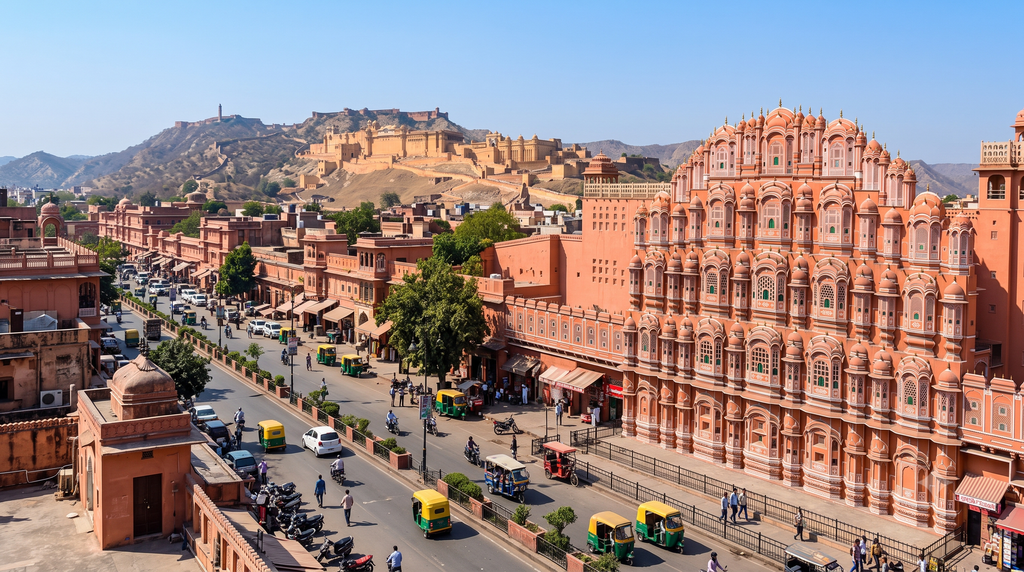
Jaipur is the natural starting point. It has the best flight and train links, and it eases you into Rajasthan with wide roads, good hotels and sights that are close together.
Day 1: Amber Fort and the hills
Start early at Amber Fort, about 11 km north of the old city. Arriving close to opening time means cooler air, shorter queues and softer light on the sandstone walls. Give it two to three hours. The Sheesh Mahal (mirror palace) is the part most people remember.
On the way back, stop at Panna Meena ka Kund, a geometric stepwell a few minutes from the fort. It takes 15 minutes and makes a great photo. Then pause at Jal Mahal, the palace that sits in the middle of Man Sagar Lake. You view it from the road, so it’s a quick stop.
Spend the afternoon resting, since Rajasthan days are long. In the evening, walk through Johari Bazaar and Bapu Bazaar for block-printed textiles, jewellery and juttis (embroidered shoes). For dinner, try dal baati churma, Rajasthan’s signature dish, at one of the older restaurants near MI Road.
Day 2: The old city
The old walled city holds Jaipur’s best-known sights, all within walking distance:
- City Palace: Still partly home to the former royal family. Look for the four decorated gates in Pitam Niwas Chowk.
- Jantar Mantar: An 18th-century observatory with giant stone instruments, and a UNESCO World Heritage Site. A guide makes it far more interesting.
- Hawa Mahal: The famous honeycomb facade. The best view is from a rooftop café across the street, not from the inside.
If you have energy left, drive up to Nahargarh Fort for sunset. It looks down over the whole city and the lights coming on below.
Tip: Jaipur sells a composite ticket that covers several monuments over two days. It’s worth checking at the first ticket counter you visit.
Days 3–4: Udaipur and the road to Jodhpur
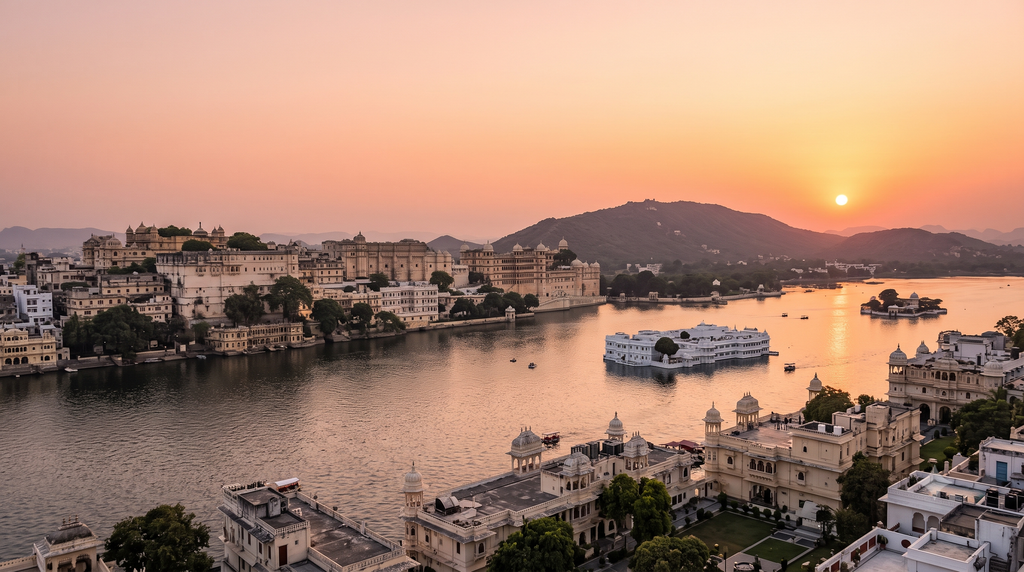
Udaipur is the softest stop on this trip. After Jaipur’s traffic, the lakes, whitewashed palaces and hills feel like a breather, which is why it works well in the middle of the week.
Day 3: Lakes and sunsets
Take a morning flight from Jaipur so you land by lunch. Check in somewhere near Lake Pichola if you can. Staying in the old city puts most sights within a 10-minute walk.
In the afternoon, visit Jagdish Temple, a carved 17th-century temple a short walk from the City Palace. Then wander the lanes around Gangaur Ghat, which are full of small art shops and miniature-painting studios.
Book a boat ride on Lake Pichola for late afternoon. Most rides pass the Lake Palace hotel and stop at Jag Mandir, an island palace. Finish at Ambrai Ghat, across the water, for the classic sunset view of the City Palace lit up.
Day 4: City Palace, Ranakpur and on to Jodhpur
See the City Palace right at opening. It’s the largest palace complex in Rajasthan, and two hours is enough for the highlights: the courtyards, the mosaics in Mor Chowk, and the views over the lake.
Leave Udaipur by late morning and drive north to the Ranakpur Jain Temple, about 90 km away. This marble temple is known for its 1,444 carved pillars, and no two are said to be alike. It is an active place of worship, so non-Jain visitors are usually allowed in only during set afternoon hours. Check the current timings before you go, and plan to dress modestly and remove leather items.
Continue to Jodhpur (about 160 km more) and arrive by evening. It’s a long day, but the Ranakpur stop is one of the most memorable moments of the whole route.
If you’d rather not rush: skip the Udaipur City Palace and leave after breakfast, or spend the night near Ranakpur and reach Jodhpur the next morning.
Day 5: Jodhpur, the Blue City
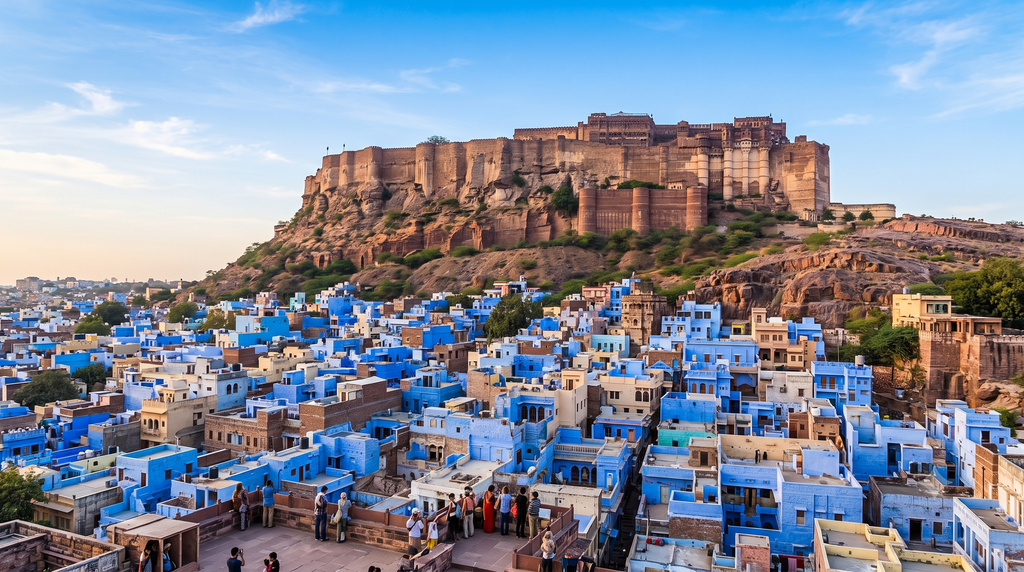
Jodhpur has one sight that justifies the whole stop: Mehrangarh Fort. It rises straight out of a rock cliff about 120 metres above the city, and it is one of the best-kept forts in India. Spend your full morning here.
Pick up the audio guide at the entrance. It’s well produced and explains the palace rooms, the weapons gallery and the royal palanquins as you walk. From the ramparts you’ll see why Jodhpur is called the Blue City: the old Brahmin neighbourhoods below are washed in shades of indigo.
After the fort, walk or take a short ride to Jaswant Thada, a white marble memorial built in 1899. It’s quiet, it has open views back to Mehrangarh, and it takes about 45 minutes.
In the late afternoon, head down into the old city on foot. A guided blue city walk through the lanes of Navchokiya and Brahmpuri is the best way to see the painted houses, since the most colourful streets are hard to find alone. End at Ghanta Ghar (the Clock Tower) and Sardar Market, where you can try a makhaniya lassi or a mirchi vada, a fried chilli fritter Jodhpur is known for.
For dinner, choose a rooftop restaurant facing the fort. Mehrangarh is floodlit after dark, and it’s a hard view to beat.
Optional extra: If you have more time, Umaid Bhawan Palace has a small museum, and the Rao Jodha Desert Rock Park below Mehrangarh offers an easy nature trail.
Days 6–7: Jaisalmer and the Thar Desert
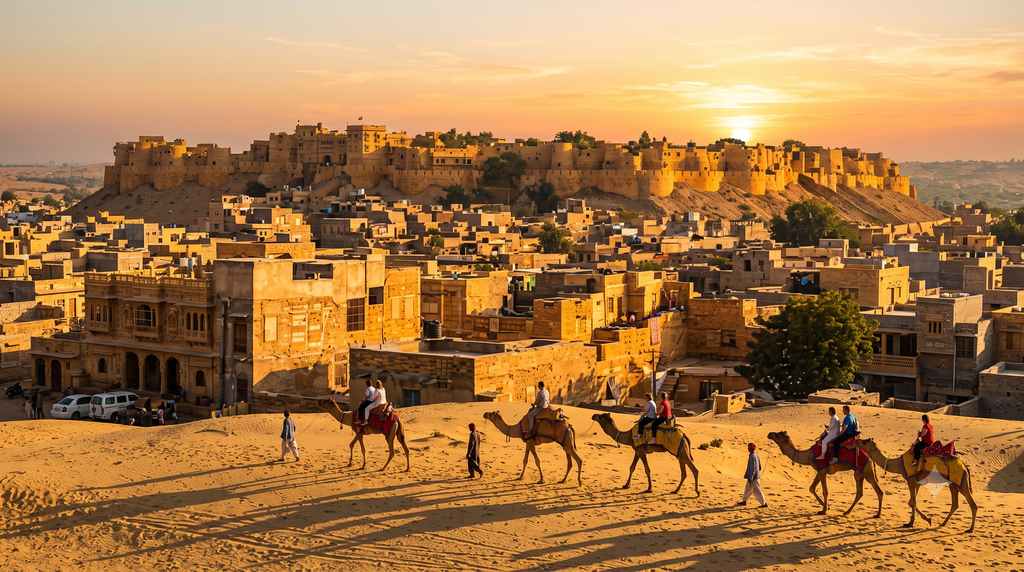
Jaisalmer is the golden end of the trip. The whole town is built from yellow sandstone, and the Thar Desert begins right at its edge.
Day 6: The fort and a night in the dunes
Leave Jodhpur early. The drive west takes about five hours, and the landscape grows emptier and sandier as you go. Aim to reach Jaisalmer by lunchtime.
Spend the afternoon inside Jaisalmer Fort (Sonar Quila). Unlike most forts in India, it’s still lived in. Around a few thousand people live within its walls, among shops, homes, guesthouses and a cluster of carved Jain temples from the 12th to 15th centuries. Walk slowly and let yourself get a bit lost in the lanes.
By 4 pm, head out to the desert for the night. You have two main choices:
- Sam Sand Dunes (about 40 km): Big, classic dunes and the most camp options. It gets busy, with jeeps and loud evening shows.
- Khuri or quieter “offbeat” dune areas: Smaller dunes, fewer people and a calmer night under the stars.
Most camps include a short camel ride at sunset, dinner, folk music around a fire and a tent for the night. Read recent reviews before booking. Quality varies a lot, from basic tents to proper rooms with attached bathrooms.
Day 7: Havelis, the lake and departure
Wake up for sunrise over the dunes, then drive back to town after breakfast.
Visit Patwon ki Haveli, a group of five merchant mansions with stone carving so fine it looks like lace. Then walk to Gadisar Lake, a historic reservoir lined with small shrines and a carved gateway. It’s calm in the late morning.
In the afternoon, catch your onward connection. Overnight trains run from Jaisalmer to Jaipur and Delhi, and Jaisalmer airport has limited, often seasonal flights. Check current schedules when you plan, since they change through the year.
Planning tips for your Rajasthan trip
Best time to visit Rajasthan
October to March is the best window. Days are warm and sunny, nights are cool, and the desert is pleasant. December and January can drop close to freezing at night in Jaisalmer, so pack a warm layer for the camp.
April to June is very hot, often above 40°C, and long outdoor days become hard work. July to September brings the monsoon. Udaipur looks its best when the lakes fill up, but desert camps are mostly closed and humidity is high.
What a week might cost
Costs vary widely with travel style and season. Here is how the three common travel styles usually differ:
| Travel style | Hotels | Typical setup |
|---|---|---|
| Budget | Guesthouses and homestays | Trains, shared tours, local restaurants |
| Mid-range | Heritage havelis and boutique hotels | Private car and driver, one flight |
| Luxury | Palace hotels and premium desert camps | Flights where possible, private guides |
Your biggest costs will be the car and driver, the Jaipur–Udaipur flight and your desert camp. Prices rise sharply over Diwali, Christmas and New Year, so book those dates early.
Practical tips that make the week easier
- Start every day early. Forts open in the morning, and the first two hours are cooler and calmer.
- Hire licensed guides at the ticket counter rather than accepting offers on the street.
- Dress modestly for temples. Cover shoulders and knees, and carry socks for hot marble floors.
- Carry cash in small notes. UPI and cards are widely used in cities, but desert camps and small shops may prefer cash.
- Stay hydrated and use sun protection. Even in winter, the midday sun is strong.
- Don’t overpack shopping. Many shops can ship larger items home, so ask before you haul a rug across the state.
How to adjust the itinerary
If seven days feels tight, cut Ranakpur and drive straight from Udaipur to Jodhpur. If you have one more day, add it to Udaipur or spend a second night in the desert. Families with young children may prefer to skip the overnight camp and do a sunset-only dune trip from Jaisalmer instead.
Frequently asked questions
Is 7 days enough for Rajasthan?
A. Seven days is enough for the four main cities if you keep moving and accept one or two long travel days. You won’t see everything, but you’ll get a strong sense of the state’s forts, lakes and desert.
Which order should I visit Jaipur, Jodhpur, Jaisalmer and Udaipur?
A. Jaipur, Udaipur, Jodhpur, then Jaisalmer works best for a one-week trip. It avoids the long backtrack from Jaisalmer and ends the trip in the desert.
Is it better to travel by train or hire a car?
A. A car with a driver is more flexible and lets you stop at places like Ranakpur. Trains are cheaper and comfortable between Jaipur, Jodhpur and Jaisalmer, but they don’t link Udaipur and Jodhpur well.
Is a desert camp in Jaisalmer worth it?
A. For most travellers, yes. A night in the dunes, with a quiet sky and a desert sunrise, is often the highlight of the trip. Choose a quieter camp if you’d rather skip loud evening shows.
Is Rajasthan safe for solo and female travellers?
A. Rajasthan is a popular and generally welcoming destination for solo travellers, including women. Usual precautions apply: use registered taxis, avoid empty lanes late at night, and stay in well-reviewed accommodation.
Key takeaways
- Travel Jaipur → Udaipur → Jodhpur → Jaisalmer to avoid backtracking.
- Visit between October and March for the best weather.
- A private car is the easiest way to cover the route, with one flight from Jaipur to Udaipur.
- Start each day early and save evenings for bazaars, rooftops and sunsets.
- Book your desert camp, trains and festive-season hotels well ahead.